
Now's a good time to get your garden tilled.
Things that are good to plant right now are:
peas
carrots
onions
spinach
chard
beets
lettuce
broccoli and cauliflower plants can be planted
but, you will want to keep them coverd to
protect from frost.
Just remember to keep them moist if we don't get rain.
Saturday, April 3, 2010


Friday, April 2, 2010
Easter Treats
NOODLE NESTS
 Start by adding 1 cup sugar and 1 cup light Karo Syrup
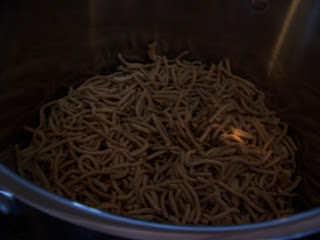

Your kids or grandkids, will have fun making these treats.
Start by adding 1 cup sugar and 1 cup light Karo Syrupto kettle. Cook and stir until mixture comes to a full
rolling boil. Then add 1 cup peanut butter, stirring to mix well.

Place 7 cups of chow mein noodles in a large bowl.
Poor syrup over and stir well. Spoon onto greased tray
and shape into nests. Add jelly beans and press lightly.
Our grandkids had a great time making these treats for their family.


Tuesday, March 16, 2010
St Patrick's Day Meal


Corned Beef and Cabbage
You will need:
your favorite brand of corned Beef Brisket
with seasonings
1 small head of cabbage, separate leaves
water
Choose the most convenient way of cooking:
1- Take meat from package and place in
a pot; cover with water. Add spices if desired.
Bring to boil., reduce to simmer. Cover with lid and
simmer about 50 minutes per pound of beef. Add several
leaves of cabage, replace lid and cook another 20 minutes
or until cabage is tender.Serve meat with cabbage.
2-Oven bake-In a baking dish, add meat, seasonings, and water
to cover. Bake at 350 for 50 minutes per pound of meat. During
the last 20 minutes, remove lid, add cabbage leaves, replace lid
and continue baking. Serve meat with cabbage.
3-crock-pot-Place corned beef brisket in crockpot; add seasoning
packet or your own seasonings. Just cover with warm water. Cook
on low 6 hours. Add cabbage and cook for one more hour.
Note: If your Corned Beef doesn't come seasoned, try adding:
2-3 cloves garlic, crushed
2 bay leaves
1/2 tsp peppercorns
1/2 cup chopped onion
2-3 carrots cut into 3 inch lengths may also be added

PEAR JELLO SALAD
8 pears, pealed and cored, or 1- 29 oz. can of pears
6 oz. package lime gelatin
2- 8 oz, packages , cream cheese
9 oz cool whip
Dissolve gelatin in 2 cups hot water. Add one cup
cold water or pear juice. In blender, add pears and blend.
Add cream cheese, blend, add dissolved jello, blend.
Set for one hour in fridge then stir in cool whip. Set 1-2
hours or until soft set.
Happy St. Paddy's Day!
Saturday, November 28, 2009
Different kinds of sugar and their uses.
 There are many different kinds of granulated sugar. Some of these are used only by the food industry and professional bakers and are not available in the supermarkets. The types of granulated sugars differ in crystal size. Each crystal size provides unique functional characteristics that make the sugar appropriate for a specific food's special need.
BAKER'S SPECIAL SUGAR
The crystal size of baker's sugar is even finer than that of fruit sugar. As it's name suggests, it was developed specially for the baking industry. Baker's Special is used for sugaring doughnuts and cookies, as well as in some commercial cake recipes to create a fine crumb texture.
CASTOR/CASTER SUGAR
UK (England)castor sugar is a very finely granulated sugar (finer than U.S. grnaulated sugar) which allows it to dissolve almost instantly. In the United States, superfine sugar or the new Baker's Sugar may be substituted. It is called 'Berry Sugar' in British Columbia.
CONFECTIONERS OR POWDERED SUGAR
In Britain it is called 'icing sugar' and in France sucre glace. This sugar is granulated sugar ground to a smooth powder and then sifted. It usually contains about 3% cornstarch to prevent caking. Powdered sugar is ground into three different degrees of fineness. The confectioner's sugar available in supermarkets -10x- is the finest of the three and is used in icings, confections and whipping cream. The other two types are used by industrial bakers.
COARSE SUGAR
Also known as pearl or decorating sugar. As its name implies, the crystal size of coarse sugar is larger than that of 'regular' sugar. Coarse sugar is recovered when molasses-rich, sugar syrups high in sucrose are allowed to crystalize. The large crystal size of coarse sugar makes it highly resistant to color change or inversion (natural breakdown to fructose and glucose) at cooking and baking temperatures. These characteristics are important in making fondants and confections.
DATE SUGAR
Date sugar is more a food than a sweetener. It is ground up from dehydrated dates, is high in fiber. Its use is limited by price and the fact it does not dissolve when added to liquids.
FRUIT SUGAR
Fruit sugar is slightly finer than 'regular'sugar and is used in dry mixes such as gelatin and pudding desserts, and powdered drinks. Fruit sugar has a more uniform small crystal size than 'regular' sugar. The uniformity of crystal size prevents separation or settling of larger crystals to the bottom of the box, an important quality in dry mixes.
GRANULATED SUGAR
Also called table sugar or white sugar. This is the sugar most known to customers, is the the sugar found in every home's sugar bowl, and most commonly used in home food preparation. It is the most common form of sugar an the type most frequently called for in recipes. Its main distinguishing characteristics are a paper-white color and fine crystals.
SUGAR CUBES
They are made from moist granulated sugar that is pressed into molds and then dried.
SANDING SUGAR
Also known as coarse sugar. A large crystal sugar that is used mainly in the baking and confectionery industries as a sprinkle on top of baked goods. The large crystals reflect light and give the product a sparkling appearance.
BROWN SUGAR-(light and dark)
Brown sugar retains some of the surface molasses syrup, which imparts a characteristic pleasurable flavor. Dark brown sugar has a deeper color and stronger molasses flavor than light brown sugar. Lighter types are generally used in baking and making butterscotch, condiments and glazes. The rich, full flavor of dark brown sugar makes it good for gingerbread, mincemeat, baked beans, and other full flavored foods.
MUSCOVADO OR BARBADOS SUGAR
Muscovado sugar, a British specialty brown sugar, is very dark brown and has particularly strong molasses flavor. The crystals are slightly coarser and stickier in texture than 'regular' brown sugar.
FREE-FLOWING BROWN SUGARS
These sugars are specialty products produced by a co-crystallization process. The process yields fine, powder-like brown sugar that is less moist that 'regular' brown sugar. Since it is less moist, it does not clump and is free-flowing like white sugar.
TURBINADO SUGAR
This sugar is raw sugar which has been partially processed, where only the surface molasses has been washed off. It has a blond color and mild brown sugar flavor, and if often used in tea and other beverages.
LIQUID SUGAR
There several types of liquid sugar. Liquid sugar (sucrose) is white granulated sugar that has been dissolved in water before used. Liquid sugar is ideal for products whose recipes first require sugar to be dissolved. Amber liquid sugar is darker in color and can be used in foods where brown color is desired.
INVERT SUGAR
Sucrose can be split into two components sugars (glucose and fructose). This process is called inversion, and the product is called invert sugar. Commercial invert sugar is a liquid product that contains equal amounts of glucose and fructose. Because fructose is sweeter than either glucose or sucrose, invert sugar is sweeter than white sugar. Commercial liquid invert sugars are prepared as different mixtures of sucrose and invert sugar. For example total invert sugar is half glucose and half fructose, while 50% invert sugar (half of the sucrose had been inverted) is one-half sucrose, one quarter glucose and one-quarter fructose. Invert sugar is used mainly by food manufactureers to retard the crystalization of sugar and to retain moisture in the packaged food. Which particular invert sugar is used is determined by which function-retarding crystalization or retaining moisture- is required.
Home cooks make invert sugar whenever a recipe calls for a sugar to be boiled in a mixture of water and lemon juice.
Courtesy of whats cooking in America
What is the difference between baking soda and baking powder?

Both baking soda and baking powder are leavening agents, which means they are added to baked goods before cooking to produce carbon dioxide and cause them to 'rise'. Baking powder contains baking soda, but the two substances are used under different conditions.
BAKING SODA
Baking soda is pure sodium bicarbonite. When baking soda is combined with moisture and an acidic ingredient ( like:yogurt, chocolate, buttermilk, honey), the resulting chemical reaction produces bubbles of carbon dioxide that expand under oven temperatures, causing baked goods to rise. The reaction bagins immediately upon mixing the ingredients, so you need to bake recipes which call for baking soda immediately, or else they will fall flat!
BAKING POWDER
Baking powder contains sodium bicarbonate, but it includes the acidifying agent already (cream of tarter), and also a drying agent (usually starch). Baking powder is available as single-acting baking powder and as double-acting baking powder. Single-acting powders are activated by moisture, so you must bake recipes which include this product immediately after mixing. Double acting powders react in two phases and can stand for a while before baking. With double-acting powder, some gas is released at room temperature when the powder is added to dough, but the majority of the gas is released after the temperature of the dough increases in the oven.
HOW ARE RECIPES DETERMINED?
Some recipes call for baking soda, while others call for baking powder. Which ingredient is used depends on the other ingredients in the recipe. The ultimate goal is to produce a tasty product with a pleasing texture. Baking soda is basic and will yield a bitter taste unless countered by the acidity of another ingredient, such as buttermilk. You'll find baking soda in cookie recipes. Baking powder contains both an acid and a base and has an overall neutral effect in terms of taste. Recipes that call for baking powder often call for other neutral-tasting ingredients, such as milk. Baking powder is a common ingredient in cakes and biscuits.
SUBSTITUTING IN RECIPES
You can substitute baking powder in place of baking soda (you'll need more baking powder and it may affect the taste), but you can't use baking soda when a recipe calls for baking powder. Baking soda by itself lacks the acidity to make a cake rise. However, you can make your own baking powder if you have baking soda and cream of tarter. Simply mix two parts cream of tarter with one part baking soda.
Sunday, November 8, 2009
Thanksgiving Stuffing
Do you like stuffing but not soggy like it gets inside of the turkey?
Try Aunt Helenea's recipe.
Dried bread piecess- enough to fill a large bowl like the large tupperware
or a metal bowl. About 32 cups size. Home made bread works well.
1 large onion diced
2-3 ribs celery diced
2 sticks butter, melted


1/4 cup Clear Jel A (found at Kitchen Kneads)
1/2 tsp cinnamon
1/2 cup cold water
3/4 cup apple juice
2 Tbsp bottled lemon juice
1/8 tsp nutmeg (optional)
Wash, Peel and core apples. (An apple peeler/corer works
great and is much faster.) Prepare slices 1/2 inch wide and
place in boiling water. Blanch for 1 minute. Meanwhile,
combine remaining ingredients except for lemon juice,
in a saucepan and bring to boil while whisking to keep
from burning. Add lemon juice and keep stirring or whisking.
Add drained apples and stir to coat. Immediately pour into
prepared jar leaving one inch of head space! Wipe rim,
place lid and ring. Place in boiling waterbath canner.
Boil for 35 minutes. Remove lid from canner for last 5 minutes
of boiling. Remove from canner to cool. A towel on a counter top
is good for setting hot jar on while cooling.
Quantities of ingredients needed for 7 quarts:
6 quarts, sliced, blanched apples
1 Tbsp cinnamon
2 1/2 cups cold water
5 cups apple juice
3/4 cup bottled apple juice
1 tsp nutmeg (optional)
cover to keep warm, while blanching the rest. You will
need a large pan or kettle to make the sauce in and still
have room for the apples.
Use the type your family prefers: tart, sweet ,mixture, etc.
You can add an additional 1/4 cup of lemon juice
to every 6 quarts of apples if your apples lack tartness
and you would prefer it.
It is currently $2.09 a pound, (good price). Ultra Gel and other
instant gels do not hold up to the heat as well and will break down
faster. Also it would take 3 cups of instant gel for 7 quarts as
compared to the 1 1/2 cups of ClearJel A. The reason for the use
of apple juice and lemon juice is to put back the acidity level
that the starch (Clear Jel) takes away. Cornstarch may be added
instead of Clear Jel A but it tends to break down in the bottle faster.
By breaking down, I mean separating and doesn't look as nice.
It is still fine to use and will mix again when heated. Following
is a recipe using the cornstarch instead. The process is the same.
4 1/2 cups sugar
1 cup cornstarch
1 tsp salt
4 1/2 cups water
5 1/2 cups apple juice
2 tsp cinnamon
3/4 tsp nutmeg (optional)
3/4 cup lemon juice
The process is the same as above.
Apple Cinnamon Puff Pancake

Try Aunt Helenea's recipe.
Dried bread piecess- enough to fill a large bowl like the large tupperware
or a metal bowl. About 32 cups size. Home made bread works well.
1 large onion diced
2-3 ribs celery diced
2 sticks butter, melted
1 can chicken broth
salt
Place bread pieces in bowl. Add onion and celery. Stir until evenly distributed.
Stir in sage a little at a time and stir until well mixed. Add melted butter a little
at a time until evenly coated. Do the same with the broth. Taste a piece every now
and then to see how it tastes, add salt if desired. Spreadlightly into large casserole
pan- or two. Bake at 325 for about an hour. outside will be crispy and the inside
will be soft and moist. Yummy! Enjoy!
salt
Place bread pieces in bowl. Add onion and celery. Stir until evenly distributed.
Stir in sage a little at a time and stir until well mixed. Add melted butter a little
at a time until evenly coated. Do the same with the broth. Taste a piece every now
and then to see how it tastes, add salt if desired. Spreadlightly into large casserole
pan- or two. Bake at 325 for about an hour. outside will be crispy and the inside
will be soft and moist. Yummy! Enjoy!
MORE THINGS TO DO WITH APPLES!
Apple Pie Filling


Quantity of ingredients needed for 1 quart
3 1/2 cups blanched, sliced apples
3/4 cup plus 2 Tbsp sugar1/4 cup Clear Jel A (found at Kitchen Kneads)
1/2 tsp cinnamon
1/2 cup cold water
3/4 cup apple juice
2 Tbsp bottled lemon juice
1/8 tsp nutmeg (optional)
Procedure:
Wash, Peel and core apples. (An apple peeler/corer works
great and is much faster.) Prepare slices 1/2 inch wide and
place in boiling water. Blanch for 1 minute. Meanwhile,
combine remaining ingredients except for lemon juice,
in a saucepan and bring to boil while whisking to keep
from burning. Add lemon juice and keep stirring or whisking.
Add drained apples and stir to coat. Immediately pour into
prepared jar leaving one inch of head space! Wipe rim,
place lid and ring. Place in boiling waterbath canner.
Boil for 35 minutes. Remove lid from canner for last 5 minutes
of boiling. Remove from canner to cool. A towel on a counter top
is good for setting hot jar on while cooling.
Quantities of ingredients needed for 7 quarts:
6 quarts, sliced, blanched apples
5 1/2 cups sugar
1 1/2 cups Clear Jel A1 Tbsp cinnamon
2 1/2 cups cold water
5 cups apple juice
3/4 cup bottled apple juice
1 tsp nutmeg (optional)
Process is the same as for doing 1 quart except that
you will blanch about 3 quarts of apples at at time.
Remove them from water and place in a large bowl,cover to keep warm, while blanching the rest. You will
need a large pan or kettle to make the sauce in and still
have room for the apples.
Quality: choose firm ripe apples of your choice.
Golden or Red Delicious, Stayman, Rome or other varieties.Use the type your family prefers: tart, sweet ,mixture, etc.
You can add an additional 1/4 cup of lemon juice
to every 6 quarts of apples if your apples lack tartness
and you would prefer it.
Clear Jel A is different than Ultra Gel and other such instant gels.
Kitchen Kneads carries the Clear Jel A for the least expensive price.It is currently $2.09 a pound, (good price). Ultra Gel and other
instant gels do not hold up to the heat as well and will break down
faster. Also it would take 3 cups of instant gel for 7 quarts as
compared to the 1 1/2 cups of ClearJel A. The reason for the use
of apple juice and lemon juice is to put back the acidity level
that the starch (Clear Jel) takes away. Cornstarch may be added
instead of Clear Jel A but it tends to break down in the bottle faster.
By breaking down, I mean separating and doesn't look as nice.
It is still fine to use and will mix again when heated. Following
is a recipe using the cornstarch instead. The process is the same.
4 1/2 cups sugar
1 cup cornstarch
1 tsp salt
4 1/2 cups water
5 1/2 cups apple juice
2 tsp cinnamon
3/4 tsp nutmeg (optional)
3/4 cup lemon juice
The process is the same as above.
Apple Cinnamon Puff Pancake
2-3 tbsp butter
3 eggs
2/3 cup milk
1 tsp vanilla
1 Tbsp sugar
pinch of salt
3/4 cup flour
2 Tbsp. butter
1/2 cup brown sugar
1 tsp. cinnamon
1/2 tsp. groung nutmeg
about 3 cups peeled, sliced apples
Preheat oven to 425. Mix together eggs, milk, vanilla,
sugar, salt and flour. Place 2-3 Tbsp butter in glass or
ceramic pie dish and put into the oven to melt. When
melted, pour in batter and cook 15 minutes, then turn
heat down to 375 and cook 10 more minutes. Cool slightly.
While pancake is cooking, melt the other 2 Tbsp butter in
a medium skillet. Add brown sugar and apple slices, then
sprinkle on cinnamon and nutmeg. Heat until bubbly and
all the sugar is melted and gooey. Cook about 5 minutes
and remove from heat. When pancake is slightly cooled,
pour apple mixture over it. Slice and serve as is or with
whipped cream or vanilla ice cream.

Thanks to Carissa for this recipe.
Thursday, October 22, 2009
Apples are on!
APPLESAUCE
2 1/2-3 pounds apples per quart
water
sugar
Wash apples, drain. Core, peel and quarter. If using a food strainer,
no need to peel or core. Cook apples until soft in a large covered
saucepan with just enough water to prevent sticking. Puree using a
food processoor or food mill, or run through a food strainer. Return
apple pulp to saucepan. Add 1/4 cup sugar per pound of apples or
to taste if desired. You don't need to add sugar if you don't want to.
Bring applesauce to boil, stirring to prevent sticking. Ladel into
clean jars leaving 1/2 inch headspace. Remove air bubbles. Wipe rims
and place lid and ring on jars. You do not need to heat lids first. Process
pints or quarts 30 minutes in boiling water bath canner.
RECIPE VARIATION: Spiced applesauce can be made by adding ground spices
such as cinnamon nutmeg, or allspice. For a chunky sauce, coarsely crush half
of the cooked apples; process remaining apples through a food mill or
food processor. Combine crushed apples and sauced apple mixtures;
continue as for applesauce.
A sweet type of ripe apple is best for applesauce such as gold and red delicious.
Time is correct for weber county area.
BOTTLED APPLES
2 1/2-3 pounds apples per quart
sugar
water
Wash core and peel apples. Apples may be cut into 1/4 inch slices,
quarterd or halved. Treat to prevent darkening. Make a light or
medium syrup; keep syrup hot. Drain apples. Gently boil apples
in syrup for 5 minutes. Pack hot apples into hot jars, leaving 1/2 inch
headspace. Remove air bubbles. Wipe rims. Adjust lids and rings.
Process pints and quart 30 minutes in water bath canner.
A variety of eating apples may be used.
****************************************************
SYRUPS FOR CANNING:
Extra-light 1 1/4 cups sugar to 5 1/2 cups water yield 6 cups
Light 2 1/4 cups sugar to 5 1/4 cups water yield 6 1/2 cups
Medium 3 1/4 cups sugar to 5 cups water yield 7 cups
Heavy 4 1/2 cups sugar to 4 1/2 cups water yield 7 cups
Corn Syrup 1 1/3 cups sugar, 1 cup corn syrup to 3 cups water yield 6 cups
Honey 1 cup sugar, 1 cup honey to 4 cups water yield 5 cups
*****************************************************
Unsweetened fruit juice or water can be used in place of a sugar syrup.
When fruits are canned without the addition of sugar, the hot pack method
must be used.
*****************************************************
APPLE RINGS
yield about 6 pints or 3 quarts
10 lbs. apples
4 cups sugar
4 cups water
red food coloring (optional)
Wash and core apples; do not peel. Slice apples crosswise into 1/4 inch rings.
Treat to prevent darkening. Combine sugar and water in a large saucepot.
Add a few drops of food coloring, if desired. Bring syrup mixture to boil;
boil 5 minutes. Remove from heat. Drain apple rings. Add rings to syrup;
let stand 10 minutes. Bring mixture to a boil; reduce heat; simmer 30 minutes.
Remove apple rings from syrup and cool. Return syrup to a boil. Pack rings
loosely into hot jars, leaving 1/2 inch headspace. Ladel hot syrup over apple
rings, leaving 1/2 inch headspace. Remove air bubbles. Adjust lids and rings.
Process pints 25 minutes, quarts, 30 minutes, in a bouling water bath canner.
RECIPE VARIATIONS: Spiced apple rings may be made by adding stick
cinnamon, whole cloves or other whole spices, tied in a bag, to the syrup
during preparation. Remove spice bag before canning apple rings.
A variety of eating apples may be used.
2 1/2-3 pounds apples per quart
water
sugar
Wash apples, drain. Core, peel and quarter. If using a food strainer,
no need to peel or core. Cook apples until soft in a large covered
saucepan with just enough water to prevent sticking. Puree using a
food processoor or food mill, or run through a food strainer. Return
apple pulp to saucepan. Add 1/4 cup sugar per pound of apples or
to taste if desired. You don't need to add sugar if you don't want to.
Bring applesauce to boil, stirring to prevent sticking. Ladel into
clean jars leaving 1/2 inch headspace. Remove air bubbles. Wipe rims
and place lid and ring on jars. You do not need to heat lids first. Process
pints or quarts 30 minutes in boiling water bath canner.
RECIPE VARIATION: Spiced applesauce can be made by adding ground spices
such as cinnamon nutmeg, or allspice. For a chunky sauce, coarsely crush half
of the cooked apples; process remaining apples through a food mill or
food processor. Combine crushed apples and sauced apple mixtures;
continue as for applesauce.
A sweet type of ripe apple is best for applesauce such as gold and red delicious.
Time is correct for weber county area.
BOTTLED APPLES
2 1/2-3 pounds apples per quart
sugar
water
Wash core and peel apples. Apples may be cut into 1/4 inch slices,
quarterd or halved. Treat to prevent darkening. Make a light or
medium syrup; keep syrup hot. Drain apples. Gently boil apples
in syrup for 5 minutes. Pack hot apples into hot jars, leaving 1/2 inch
headspace. Remove air bubbles. Wipe rims. Adjust lids and rings.
Process pints and quart 30 minutes in water bath canner.
A variety of eating apples may be used.
****************************************************
SYRUPS FOR CANNING:
Extra-light 1 1/4 cups sugar to 5 1/2 cups water yield 6 cups
Light 2 1/4 cups sugar to 5 1/4 cups water yield 6 1/2 cups
Medium 3 1/4 cups sugar to 5 cups water yield 7 cups
Heavy 4 1/2 cups sugar to 4 1/2 cups water yield 7 cups
Corn Syrup 1 1/3 cups sugar, 1 cup corn syrup to 3 cups water yield 6 cups
Honey 1 cup sugar, 1 cup honey to 4 cups water yield 5 cups
*****************************************************
Unsweetened fruit juice or water can be used in place of a sugar syrup.
When fruits are canned without the addition of sugar, the hot pack method
must be used.
*****************************************************
APPLE RINGS
yield about 6 pints or 3 quarts
10 lbs. apples
4 cups sugar
4 cups water
red food coloring (optional)
Wash and core apples; do not peel. Slice apples crosswise into 1/4 inch rings.
Treat to prevent darkening. Combine sugar and water in a large saucepot.
Add a few drops of food coloring, if desired. Bring syrup mixture to boil;
boil 5 minutes. Remove from heat. Drain apple rings. Add rings to syrup;
let stand 10 minutes. Bring mixture to a boil; reduce heat; simmer 30 minutes.
Remove apple rings from syrup and cool. Return syrup to a boil. Pack rings
loosely into hot jars, leaving 1/2 inch headspace. Ladel hot syrup over apple
rings, leaving 1/2 inch headspace. Remove air bubbles. Adjust lids and rings.
Process pints 25 minutes, quarts, 30 minutes, in a bouling water bath canner.
RECIPE VARIATIONS: Spiced apple rings may be made by adding stick
cinnamon, whole cloves or other whole spices, tied in a bag, to the syrup
during preparation. Remove spice bag before canning apple rings.
A variety of eating apples may be used.
Subscribe to:
Posts (Atom)